
Picture this... A visitor walks the aisle on a trade show floor. They walk past a stand, but don't stop. The stand has a clever tagline spanning across the top. It sounds impressive, but the visitor can't work out what the company actually does.
So they keep walking.
If you've ever stood on your own stand wondering why the aisle is busy but nobody is stopping, there is a good chance this is why.
Most exhibitors think messaging is there to attract attention. It does far more than that. It determines who stops, what they already believe by the time they reach your stand, and how much work your team has to do from that moment onwards.
Walk enough exhibition halls and the pattern gets easy to spot.
Once you see them... You can't unseen them.
A clever tagline works when people already know your brand, or when they've got time to sit with it, like on a website.
A trade show floor is usually chaotic for a visitor. There's noise everywhere, dozens of messages competing for the same eyeballs. Being too vague or clever loses more attention than it gains. Clarity wins every day of the week.
There's a simple tell for weak exhibition stand messaging. If a visitor has to walk up and ask "so what do you actually do?" before anything else can happen. Or the stand is so loaded with text that the one point that matters gets buried under six that don't. Either way, the message has already failed before a single conversation ever started.
The job of a great message is rarely to maximise engagement. It is to make people stop.
The Hidden Cost Of Being Everything To Everyone
What if the job of your stand wasn't to attract more people? What if it was to repel the wrong ones?
Every brand's messaging should look different depending on what outcome a business wants from that specific show. Sometimes the goal is to talk to one narrow type of customer. Sometimes it's to reach as many people as possible. It could be to shift brand perception, or shine a spotlight on one product instead of the whole range. My universal rule for good messaging is that it must always work with your event objective.
Trouble starts when a stand's message tries to satisfy every internal stakeholder's priority at once (a normal thing to happen, not a failure of anyone involved). Different stakeholders naturally see the business through different lenses, and each one has a legitimate reason for wanting their piece included. But messaging built by committee usually ends up being a one-size-fits-all line that could belong to almost any exhibitor in any industry.
Part of my job as a trade show strategist is finding the gaps between those internal perspectives and aligning everyone around one message that can actually do commercial work on the floor.
One question worth asking that I challenge all my clients with is this: "What's the one thing you want every one to walk away knowing about you?" Most teams have never actually agreed on the answer. You'd be surprised how often the room goes quiet.
Why Visitors Self-Qualify Before They Speak To You
The biggest job of exhibition messaging isn't attracting attention. It's deciding which conversations your team will have all day.
Visitors will self-select. Either they stop on their own because the message gave them a reason to, or they slow down long and engage long enough for your team to notice and intercept them in the aisle.
The reaction you're hoping for sounds like "I didn't know you did that" or "I need to find out about this." If your team is spending most of their time over-explaining the basics just to get someone interested in the first place, that's a sign the messaging isn't carrying its share of the load.
That's where it gets interesting. A message can do more than attract attention, it can actively change the type of conversation that follows.
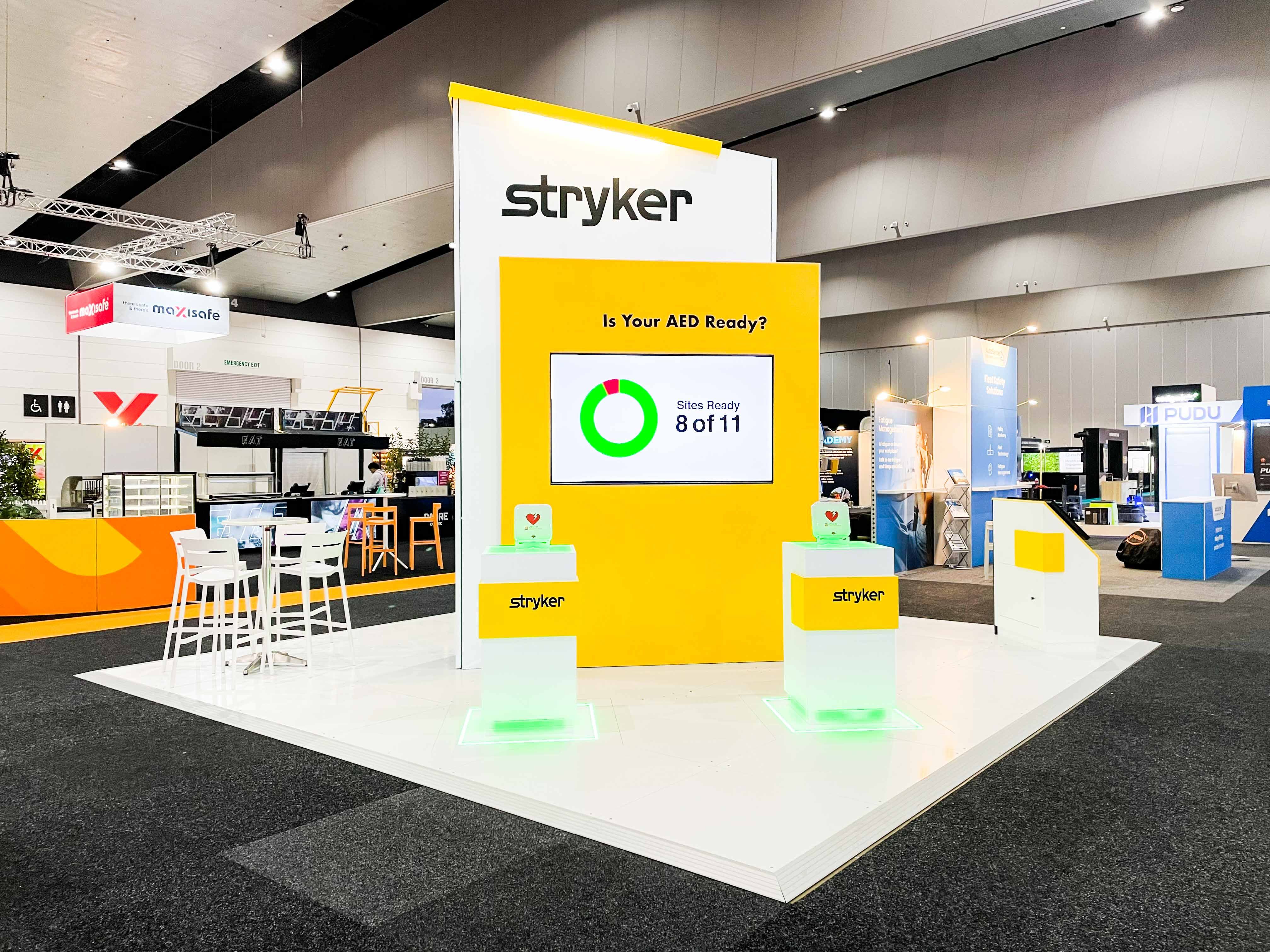
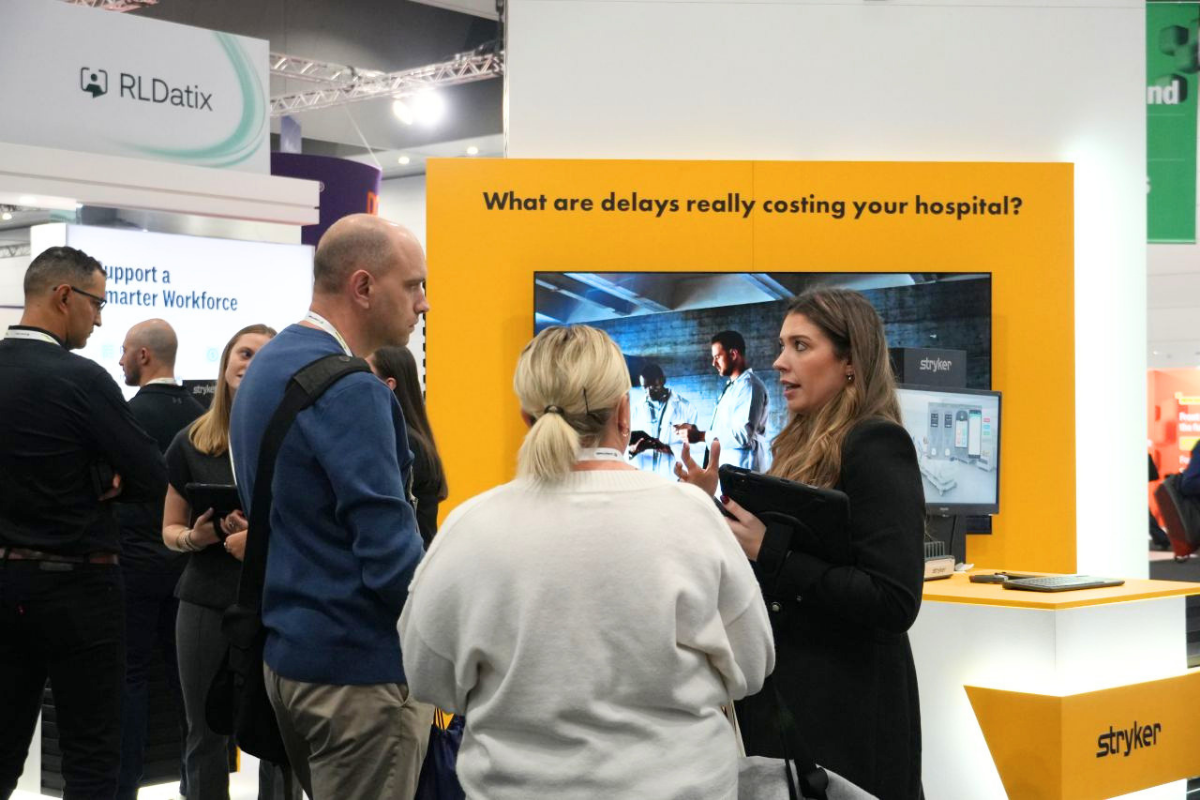
On a project with Stryker, the key message became "Are your AEDs ready?" Instantly, the people responsible for compliance and equipment readiness looked inward and asked themselves the same question. It moved the team away from a generic product-led conversation and demo, because the messaging had already done the filtering.
The team wasn't pitching a product. They were continuing a conversation the visitor had effectively started with themselves.
Give someone a reason to walk over and the conversation that follows will look completely different to one your team had to drag out of a stranger.
Clarity Beats Clever
On the floor, you've got roughly three seconds before someone's attention moves to the next stand. That's the real tension in exhibition stand messaging: exhibitors want to stand out creatively, but standing out only counts if people understand why they should stop within those three seconds.
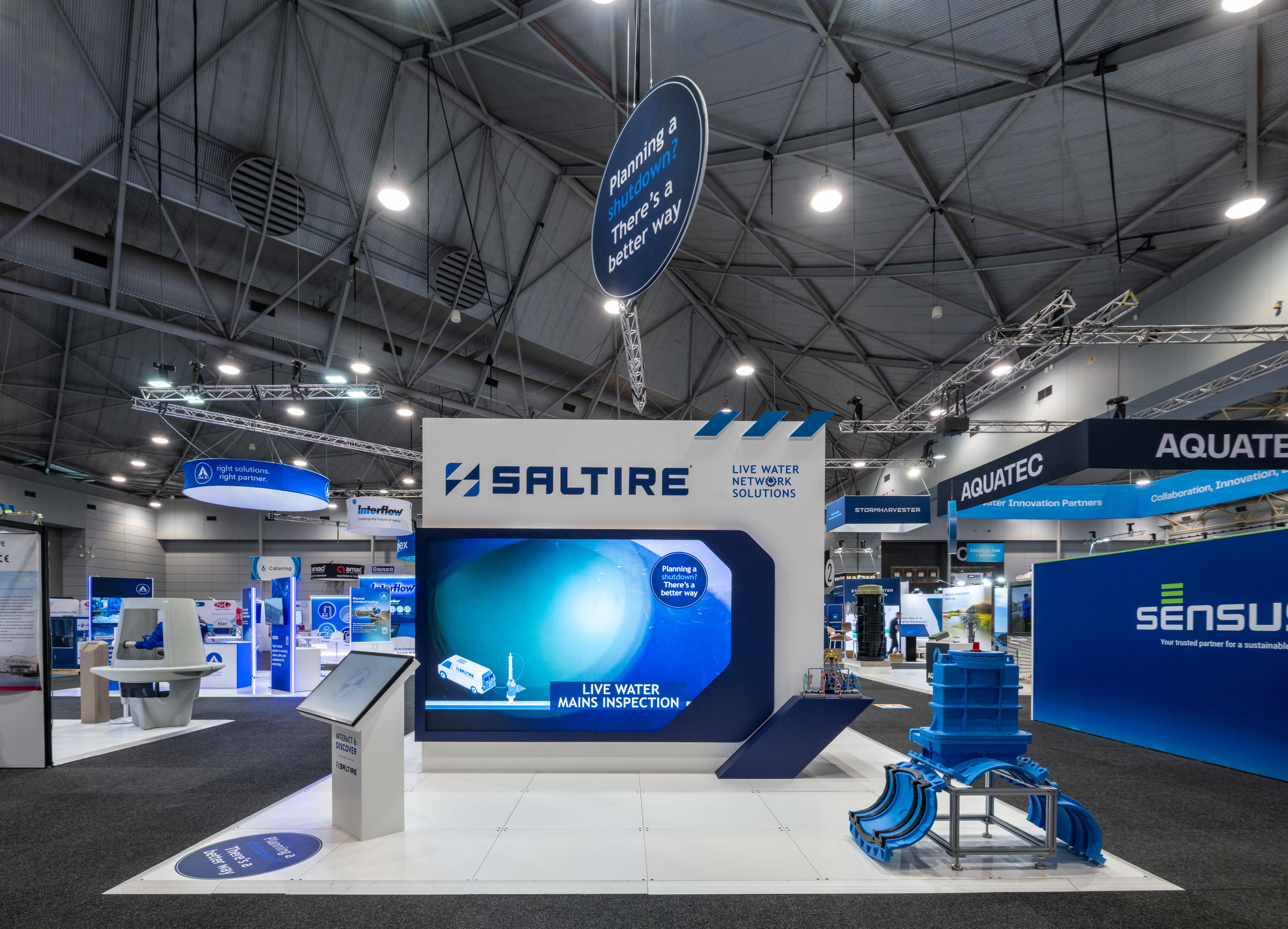
We saw this play out clearly across two shows with the same client, Saltire Infrastructure.
At the first show, the priority was educating a broad audience on their point of difference, so the message was direct and wide-reaching: "Live water mains inspection." It cast a wide net and did exactly what it needed to.
By the second show, the strategy had shifted. Conversations during our strategy workshop made it clear they weren't reaching the right people early enough in the project cycle. So the message changed to "Before you plan a shutdown, there's a better way," aimed squarely at the people responsible for planning that shutdown in the first place.
It was the same client, same expertise, but a different objective...
And the conversations that followed were completely different.
Before you ask whether people noticed your stand, ask yourself this. Did the people you wanted notice it?
Why Good Messaging Reduces Qualification Pressure
Every visitor who shouldn't stop is just as valuable as the ones who do. Because every irrelevant conversation costs your team time they could have spent with the right buyer.
Here's the strange part. Messaging doesn't just affect who stops, it affects how your team feels by the end of the day. When the messaging isn't doing its job, your team ends up wasting time having the same conversation twenty times over, explaining the same basics to person after person who may have zero intention of buying.
By halfway through the day, their energy drops.
By the end...
They're exhausted.
They are carrying a weight that they usually can't put their finger on.
Not because they've been busy.
It's the cost of the wrong conversations, repeated all day.
How Messaging Changes Behaviour
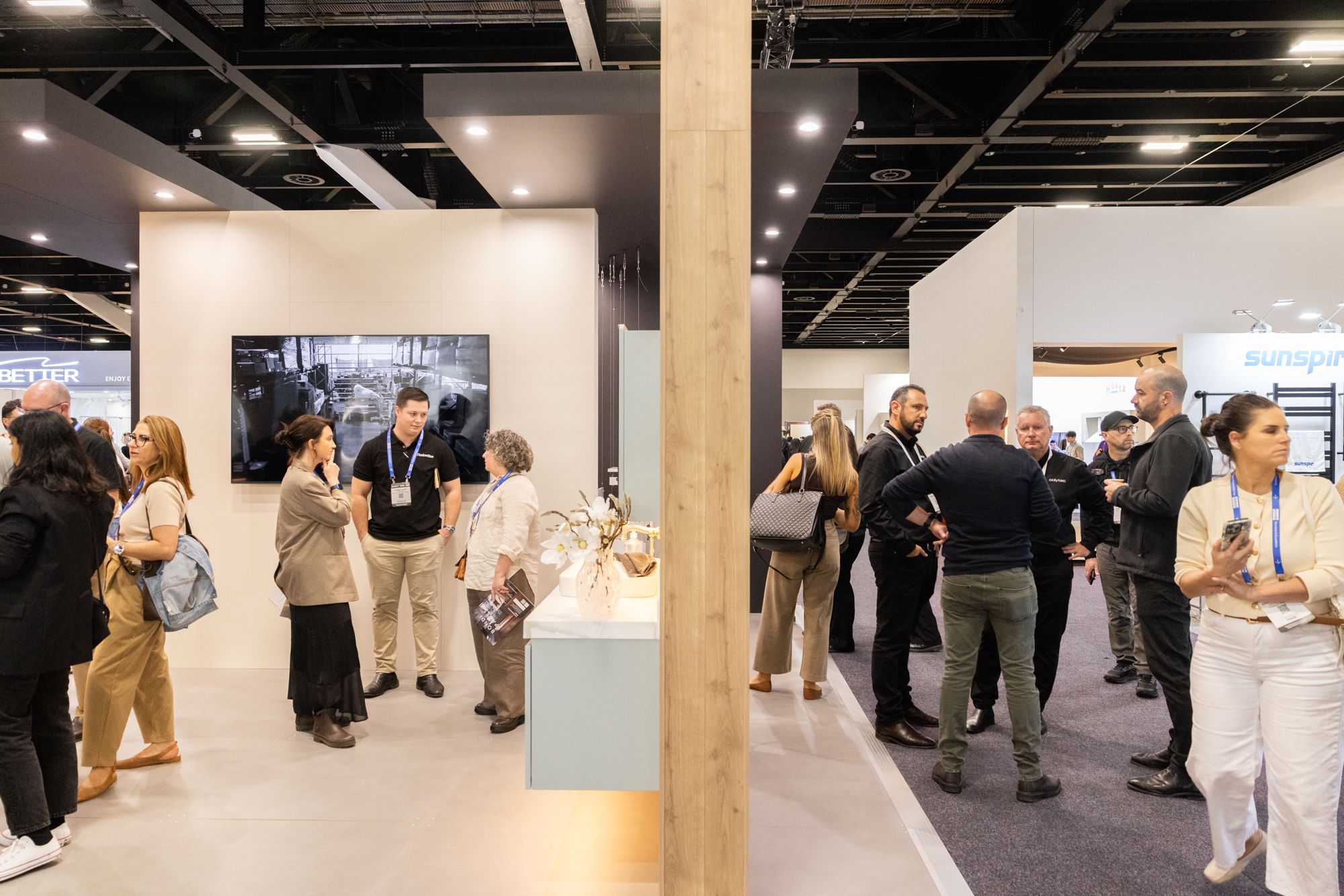
It doesn't stop at your team's energy levels. The same message shapes who notices your stand, who stops, who self-qualifies, and how every conversation that follows actually starts.
Get it right, and each of those moments compounds into momentum on the floor. Get it wrong, and almost nobody notices the damage, because a stand that's quietly underperforming looks exactly the same from the outside as one that's working.
Common Messaging Mistakes
By this point you might be wondering... "So what does bad messaging actually look like?"
Here are some patterns I see on almost every show floor, regardless of industry:
- Leaning on a tagline built for a website or an audience who already knows the brand, not a floor of strangers moving past at speed
- Trying to write a one-stop-shop message that could belong to almost any business in any industry
- Overloading the stand with text until the one point that matters gets lost in the ones that don't
- Letting internal stakeholders each add their piece until the message is meaningful to them, but needs explaining to a prospect
Good stand messaging examples almost always do the opposite of all four.
How To Test Your Message Before The Event
You don't need to wait for the show floor to find out whether your exhibition stand messaging actually works. Almost every team I work with is already sitting on the tools to test them beforehand: social content and newsletters running ahead of the event are gold.
A/B testing subject lines, watching click-through rates, and tracking engagement on different phrasings can happen before a single stand panel gets printed.
It's worth spending more time in the planning phase getting this right, because the message shapes everything that happens downstream of it, from who stops to what kind of conversation your team ends up having. There are consequences.
Final Thoughts
The physical stand still matters. But it works in partnership with messaging, not instead of it. A good stand hierarchy usually looks like this: logo and brand visible from a distance, then a reason to stop as people get closer (that reason is the messaging), and by the time they're actually on the stand, attention has already been earned. Then you can have the immersive moment.
This hierarchy ensures people who already know your brand can find you when they're looking. People who don't know you get a real reason to stop in the first place. And those who interact and show interest get rewarded. Most exhibitors miss the difference between those these jobs.
Most exhibitors treat messaging as something that gets printed onto a wall. In reality, it's the first member of your exhibition team!
It starts conversations, filters visitors, sets expectations and quietly determines the quality of every interaction that follows.
That's a much bigger job than filling empty space on a stand.
FAQs
Why doesn't our stand messaging seem to work?
Usually one of a few things: the message is too clever for a floor where you've only got a few seconds. It's either too abstract or trying to speak to everyone at once and ends up speaking to no one, or there's simply too much text competing for attention. Strong exhibition stand messaging does one job clearly rather than several jobs vaguely.
How much text should be on an exhibition stand?
If you can't read it and understand it while walking past, in about three seconds, it's too long. That's the practical test, not a word count. But each design needs to be considered as a whole.
What does good trade show messaging look like?
It filters as well as it attracts. Visitors self-qualify before your team ever says a word, either stopping because the message gave them a reason to, or moving on because it didn't. When it's working, the conversation that follows starts further along than "so what do you do?"