There's a particular kind of disappointment that can slowly build a few weeks after a trade show. It happens when a team finishes a show on a high, reasonably confident with their efforts. They've had plenty of conversations, the stand was busy and everyone heads home feeling good about what they've achieved.
Then a few weeks pass.
Sales has followed up with the hottest leads and a few meetings might have happened. The rest have made their way into the CRM, where everyone assumes they'll be looked after. But when someone asks what the exhibition actually delivered, the answers start getting a little vague.
I've seen this happen with businesses that have excellent salespeople, experienced marketing teams and substantial exhibition budgets.
So what's going wrong?
It's tempting to point to the follow-up or the lead quality not being as good as everyone thought. Perhaps sales didn't move quickly enough or the emails weren't particularly compelling. Sometimes that's exactly what happened, but I've found that a lot of trade show follow-up problems begin loooong before the exhibition finishes.
And by the time everyone gets back to the office, some of the most valuable opportunities have already passed.
Why a badge scan isn't a qualified trade show lead
I've watched incredibly experienced salespeople have fantastic conversations at trade shows, scan someone's badge and walk away convinced they've done their job. Sometimes it's because they already know the contact. Other times, they've had a conversation they believe they'll remember.
Except three days later, they've had another 40 conversations, travelled home, worked through a mountain of emails and returned to everything that was waiting for them before they left.
How much of that original conversation do they really remember? More importantly, how much of it is available to anyone else in the business?
A badge scan generally gives you contact information. It doesn't necessarily tell you what the person was interested in, what problem they're trying to solve, how far along they are in a decision or what was agreed during the conversation.
It certainly doesn't tell you that little Johnny broke his leg at the athletics carnival.
That last detail might sound completely irrelevant to lead management, but it's exactly the sort of thing that makes a follow-up feel human. Imagine reconnecting with someone and remembering something personal they shared, rather than opening with another version of "It was great meeting you at the expo."
There's a difference between being contacted and being remembered. And trade shows give businesses a pretty rare opportunity to create that kind of connection.
A badge scanner is a tool. It isn't a lead capture strategy.
I've written a separate guide on qualifying trade show leads, because collecting a contact and identifying a genuine opportunity are two very different things.
The best exhibition conversations don't always happen on your stand
One of the things I love about exhibitions is that people behave a little differently when they're face-to-face. This is where so much juicy stuff happens.
Most of our working relationships now involve emails, phone calls and back-to-back Teams meetings. Then, for a few days, everyone gets to be in the same place and something interesting happens.
People tell you things they might never put in an email.
You find out why a project has really stalled. You hear about an internal challenge that hasn't been mentioned before. Someone admits they're frustrated with a current supplier or tells you what is actually influencing a purchasing decision. Sometimes they simply feel comfortable enough to be more candid.
You also pick up on things that are harder to interpret through a screen. Their personality, what they're excited about, what makes them hesitate. Now you see why I call it juicy!
These details can help a business better understand its customers and progress relationships, but they don't magically end up in the CRM. And they don't only happen on the stand.
I've seen valuable connections made over lunch, walking through the exhibition hall, at networking functions and even while packing up after a show. Yet some teams still approach lead capture as though it only happens when someone walks onto the stand and presents a badge.
I've even seen an entire exhibition team sharing one lead scanner.
Think about that for a moment. A business has invested considerable money in creating opportunities to meet people, but its team is waiting for a piece of equipment before it can record those conversations.
Then there are the notebooks, handwritten forms and business cards dropped into bowls. You can probably guess I'm not a fan.
Aside from the practical problems of deciphering handwriting or losing information altogether, these approaches often reduce a potentially valuable conversation to a name, phone number and whatever someone can scribble down in the time they've got. The information you take away from an exhibition should be worth considerably more than that.
Because once the event finishes, you can't go back and capture a conversation you didn't document.
Why post-show follow-up loses momentum
I don't think most exhibition teams deliberately neglect their post-show follow-up. I believe they have the best intentions, but while they've been at the event, normal business hasn't stopped.
Emails have accumulated, internal projects need attention, clients are waiting, meetings have been postponed (and their home life is backing up too). Now there's a list of exhibition contacts to follow up as well.
Naturally, the most promising opportunities tend to get attention first. If someone has an immediate requirement, there's a strong commercial reason to pick up the phone.
But what happens to everyone else?
Some contacts go into a standard nurture sequence. Others are distributed across the sales team. Some sit in the CRM until someone has time to revisit them.
The issue isn't necessarily that these people weren't valuable. It's that, without enough information from the event, it becomes difficult to distinguish between someone who was politely interested and someone who could represent a meaningful opportunity in six months.
Recognising their level of intent matters because they need different conversations. It might be an existing customer exploring something new or an influential contact who isn't the budget holder.
There's an advantage to meeting people in person, and treating everyone the same risks wasting it.
This is where the excitement of the event often starts to fade. A show that felt incredibly successful on Friday can look much less impressive six weeks later, and it's not necessarily because the opportunities weren't there. Sometimes the business simply wasn't equipped to recognise and develop them.
What happens when trade show leads disappear into the CRM?
Here's something that continues to surprise me.
Businesses can invest an enormous amount of money in CRM systems and still struggle to tell me what happened to the leads they generated at their last exhibition.
I regularly work with organisations that have extremely capable salespeople. They're brilliant at building relationships and closing business. Keeping their CRM up to date is not always where their enthusiasm lies.
It's understandable to a point. Salespeople are busy and updating records can feel like administration rather than selling, but the consequences extend beyond their individual pipeline.
Marketing has invested in the campaign and leadership wants to know whether the investment was worthwhile. The information needed to answer those questions is sitting somewhere between the people who attended the event and a system that doesn't always reflect what's actually happening.
Marketing might know how many leads were collected and handed to sales. Sales might know which conversations progressed. But it's frighteningly common for me to encounter teams where nobody has a complete view of what the exhibition contributed.
And there's another part of this that I think deserves more attention.
What about the sales opportunities that already existed?
Not every commercially significant exhibition conversation happens with someone you've never met.
Imagine a prospect that's been in your pipeline for months. You've exchanged emails, had a few meetings and struggled to move things forward. Then you meet them at an exhibition.
Perhaps they finally meet someone senior from your business. A conversation clears up a concern that's been holding them back, or they see something that changes how they understand your offer.
And the opportunity moves forward!
So how does the exhibition get recognised for that?
It wasn't a new lead generated at the show, and depending on how the business tracks performance, the exhibition's contribution might never be recorded.
But did that face-to-face interaction potentially play an important role in progressing the relationship? Absolutely.
This is a scenario I see pretty regularly. It demonstrates how a business can be successfully progressing opportunities while its marketing team struggles to show the exhibition's value.
Following up with leads and understanding what happened to them are not the same thing.
Not every exhibition is about generating sales leads
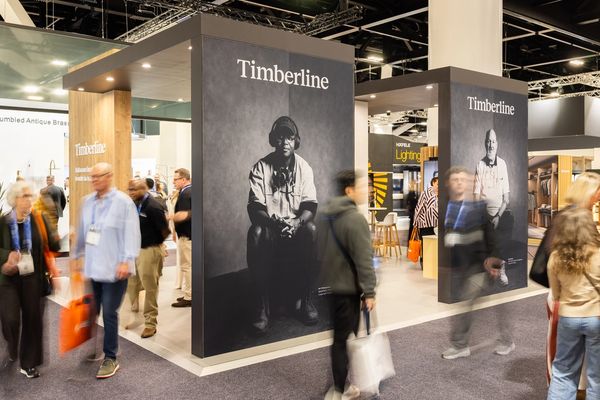
I worked with Timberline, a business where generating direct sales wasn't the objective because they don't sell directly to the end customer. They wanted to better understand how people perceived their brand and identify opportunities to strengthen relationships, inform future marketing activity and explore collaborations.
The information we were interested in collecting reflected those goals.
Imagine if we'd judged their exhibition purely on how many badges were scanned or how many sales resulted immediately afterwards. We would have been measuring something the business wasn't there to achieve.
Yet I see organisations do versions of this ALL. THE. TIME.
Before an exhibition, they talk about increasing awareness, meeting existing customers, strengthening relationships, understanding the market and supporting future sales.
But afterwards, when someone asks how the show went, suddenly the conversation revolves around lead numbers alone.
- How many did we get?
- Were they better than last year?
- How much did each lead cost?
Those questions can be useful when lead generation is genuinely the objective. But when they're the only figures available, they end up carrying the weight of every other reason the business attended.
And a trade show can deliver valuable outcomes that never feature in the final assessment. It also means businesses can make decisions about future exhibitions with only part of the picture.
Sometimes the follow-up problem started months earlier
I once worked with a business that invested in a substantial exhibition presence. The stand attracted an enormous amount of attention. It was arguably one of the busiest at the show.
People wanted to be there. Hang out and be part of what they'd built.
From the outside, it looked like the sort of exhibition presence many businesses would love to have.
But the team walked away without a single quality lead.
That's a gut-wrenching result when you consider the investment involved.
What made it particularly frustrating was that we'd identified several areas in the lead-up to the event that needed attention. But the business chose not to act on several of those recommendations.
Instead, they defaulted to what was familiar. Their messaging followed existing corporate conventions, the team's approach remained largely unchanged, and the decisions that created a lively, popular stand weren't necessarily the ones that would attract the people they most wanted to reach.
They'd created an environment people wanted to spend time in.
But that wasn't the same as creating the commercial opportunities they'd set out to achieve.
This is why I find it difficult when a disappointing exhibition is immediately blamed on the organiser, the quality of visitors or what happened during follow-up. Those things might absolutely contribute. Sometimes the show simply isn't the right fit for the business.
But before arriving at that conclusion, I'd want to understand something else.
Did the decisions made before and during the exhibition actually support what the business was trying to achieve?
- If you wanted a certain number of meetings at your stand, what did you do to make those meetings happen?
- If you wanted to attract a particular audience, did your messaging give those people a reason to stop?
- If quality conversations mattered more than volume, was the team prepared to recognise and capture them?
I've explored the importance of attracting the right audience in more detail in The Exhibition Messaging Guide.
It's incredibly difficult to judge an outcome fairly without the right evidence. And you need to think about what that evidence might look like before the show even starts.
How exhibition strategy influences what happens after the show
There's a reason I'm so passionate about exhibition strategy. When I work with businesses, I'm often connecting conversations that are happening separately across different parts of the organisation.
Leadership has commercial priorities. Marketing is tasked with delivering the exhibition. Sales is responsible for developing opportunities.
Everyone might be doing their job well, but they don't always have the same information or a shared understanding of what the event needs to achieve.
Marketing teams can find themselves planning exhibitions with only half the picture. They're expected to generate results but aren't always involved in the broader conversations about which opportunities matter most, what the business needs to learn or how success will be recognised.
Meanwhile, sales teams can focus on collecting contacts without appreciating how valuable their conversations could be to future marketing and commercial decisions.
That's where I often step in.
I bring an exhibition specialist's perspective to the conversations already happening inside a business, helping connect the decisions being made to the outcomes everyone is working towards.
And no, this isn't about adding more admin work for everyone. It's about recognising that an exhibition is a substantial business investment, and the information generated by that investment can influence considerably more than the next sales call.
When those priorities are connected early, the team has a much clearer understanding of what matters during the event and what needs to happen afterwards.
The best post-show follow-up starts before the show opens.
Before you call the exhibition a success or failure
I've heard plenty of exhibitors describe a show as disappointing because they didn't collect as many leads as expected. Sometimes they'll compare it with the previous year. Perhaps the numbers were down or the leads didn't seem as promising.
Other times, the exhibition felt fantastic at the time, but the results haven't lived up to the initial excitement.
It's tempting to look for an explanation. That's human nature. We want closure.
Maybe the organiser didn't attract the right people. Maybe the stand location wasn't ideal. Perhaps the sales team should have followed up more quickly. All possibilities worth considering, but I'd be reluctant to settle on any of them without looking at the bigger picture.
Before making that judgement, I'd be asking:
- Was the goal right in the first place?
- Did the decisions made before and during the show genuinely support it?
- Do we have enough evidence to understand what happened?
- What can we learn that would make the next exhibition more effective?
People don't always realise how much opportunity lies in examining what they've already done. It's not just about deciding whether the last show was worth the budget. It's about making better-informed decisions about what comes next.
Make your next exhibition a more informed investment
An exhibition can teach you an enormous amount about your audience, how your messaging lands and how people respond to your business. You can learn where opportunities progress, where they stall and which parts of the experience genuinely contribute to your commercial objectives.
But that learning doesn't happen automatically, particularly when everyone's already moved on to the next project.
That's part of the value I bring through OSCAR.
I work alongside marketing teams as an exhibition strategy specialist, helping them connect the dots between what the business wants to achieve, what's happening on the show floor and what the results are telling them.
Sometimes that involves developing an exhibition strategy from the beginning. Other times, a business needs an independent perspective on an event it has already delivered.
If you've recently exhibited, my Post-Show Performance Analysis looks at what the event delivered, where the gaps appear and what patterns might be influencing performance.
It's a chance to step outside the day-to-day pressures of delivering exhibitions and take a closer look at the available evidence.
Because even when you can't change what happened at the last show, you can still learn something that makes the next one better. And when you're investing that much time, money and effort in exhibiting, that's worth understanding.
FAQs
Why do trade show leads fail to convert?
Trade show leads can fail to progress for several reasons, including inadequate qualification, missing conversation details, competing priorities after the event and follow-up that doesn't reflect what the visitor actually needs. Sometimes the problem begins before the show, when the team hasn't established what information it needs to capture.
How soon should you follow up after a trade show?
Timely follow-up matters, particularly when a visitor has expressed an immediate need or agreed to a next step. But speed alone isn't enough. A relevant, personalised conversation based on what was discussed at the event is more valuable than a generic message sent simply to meet a deadline.
How do you measure trade show follow-up success?
Lead count and immediate sales tell only part of the story. Depending on the exhibition's objectives, useful evidence may also include qualified opportunities, progress on existing deals, meetings secured, relationships strengthened and insights that inform future marketing decisions. The important thing is establishing what success means before the event.